Owner complaints
395NHTSA recordsUSED VEHICLE RESEARCH
2019 Toyota Camry
Research the 2019 Toyota Camry using available NHTSA owner complaints, safety recalls, manufacturer communications, defect investigations, and CarIQ data-coverage analysis.
DATA CONFIDENCE: Moderate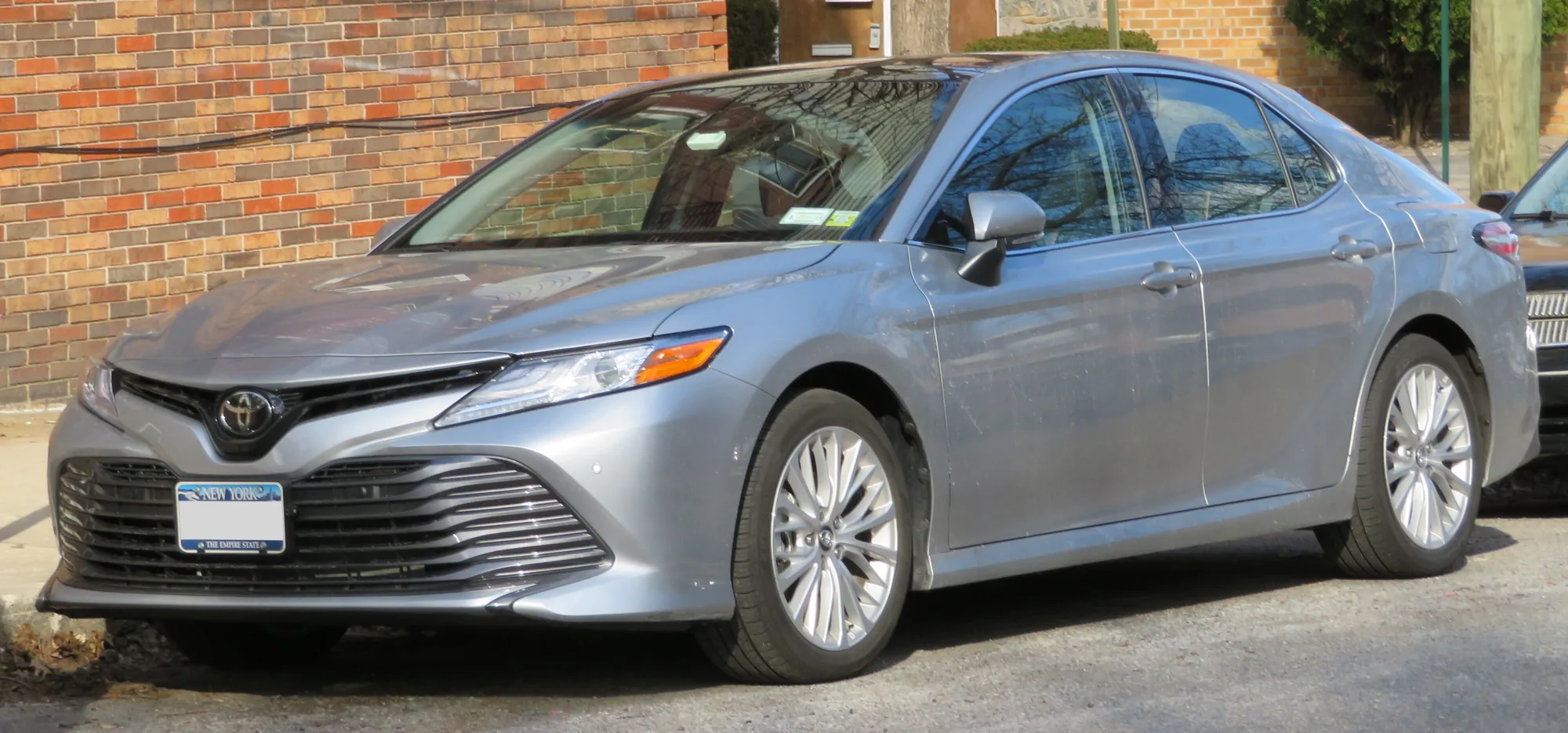 Representative image
Recall campaigns
6Year, make and model lookupManufacturer communications
231Matched NHTSA recordsInvestigations
0Matched NHTSA recordsSUBJECTIVE OWNER FEEDBACK
OWNER EXPERIENCE
What it is like to live with the vehicle—kept clearly separate from official NHTSA evidence.
THE FIRST USEFUL PERSPECTIVE COULD BE YOURS
No approved owner experiences yet.
Contributions are collected carefully and only appear here after moderation. No placeholders, sample testimonials, or invented sentiment.OWNED THIS CAR?
Help the next buyer understand the real ownership experience.
Share what you liked, what could be better, and whether you would choose it again. Every contribution is moderated before publication.INDEPENDENT EVIDENCE TYPES
NHTSA owner complaint records remain part of Official Vehicle Data. Subjective review contributions remain in Owner Experience. One does not validate or prove the other. Read the methodology.
EVIDENCE, NOT A SCORE
WHAT THIS DATA CAN TELL YOU ABOUT RELIABILITY
Official records can provide useful research context, but each source has a different meaning. Complaint counts are not failure rates; recalls are formal safety campaigns; manufacturer communications are technical or service documentation; and investigations reflect formal NHTSA activity. Data Confidence measures evidence availability, not vehicle quality. CarIQ does not publish a composite Reliability Score.
Available evidence summary: 395 NHTSA owner complaint records; 6 safety recall campaigns; 231 manufacturer communications; 0 applicable NHTSA defect investigations.
EVIDENCE AVAILABILITY — NOT VEHICLE RELIABILITY
DATA CONFIDENCE
ModerateData Confidence measures how much usable evidence CarIQ has for this vehicle. It does not measure how reliable the vehicle is.
Why this rating?
- Owner complaint data
- Available
- Manufacturer communications
- Available
- Recall data
- Available
- Investigation data
- Available
- Production denominator
- Unavailable
- Complaint component completeness
- 100%
- Mileage completeness
- 0%
- Incident-date completeness
- 100%
DESCRIPTIVE ANALYTICS
DATA INSIGHTS
Derived from official NHTSA source records. These statistics are descriptive and are not a reliability score.
- Complaint records analyzed
- 395 NHTSA complaints
- Most reported component
- Power Train 29% of categorized complaint records
- Top-three component concentration
- 58% Records mentioning at least one top-three component
- Median reported incident mileage
- Not available from current source 0 valid mileage observations
- Recall campaigns
- 6 NHTSA recalls
- Most recent recall report
- November 17, 2021 NHTSA recalls
- Manufacturer communications
- 231 NHTSA manufacturer communications
- Most documented component
- Equipment 22% of categorized communications
- Top-three communication concentration
- 46% Share of categorized manufacturer communications
SOURCE COMPLETENESS
DATA QUALITY
- Complaint records analyzed
- 395
- Component classification available
- 100%
- Incident date available
- 100%
- Mileage available
- 0%
- Structured outcome fields available
- 100%
Completeness describes fields present in the retrieved complaint records. It is not a data-quality grade or a vehicle assessment.
Learn about CarIQ methodologyPRODUCTION-ADJUSTED DESCRIPTIVE METRIC
NORMALIZED COMPLAINT CONTEXT
Production-normalized complaint data is not currently available for this vehicle.
This metric compares the number of NHTSA owner complaint records retrieved by CarIQ with NHTSA-reported production volume for the corresponding vehicle population.
It is not a vehicle failure rate. Complaint reporting behavior, vehicle age, time on the road, production definitions, and other factors can affect the result.
Source: National Highway Traffic Safety Administration, Early Warning Reporting, Light Vehicle Production Data. Read the methodology.
OFFICIAL NHTSA OWNER COMPLAINT DATA
PROBLEMS REPORTED IN NHTSA RECORDS
CarIQ groups available NHTSA owner complaint records for the 2019 Toyota Camry by vehicle system to make recurring documentation easier to research. Most represented complaint categories describe the retrieved records—not failure frequency.
TOTAL COMPLAINTS395
MOST REPRESENTED COMPLAINT CATEGORIES
Power Train113 complaints
29%of categorized complaint records
Engine80 complaints
20%of categorized complaint records
Unknown or Other65 complaints
16%of categorized complaint records
Fuel/propulsion System64 complaints
16%of categorized complaint records
Service Brakes42 complaints
11%of categorized complaint records
Electrical System27 complaints
7%of categorized complaint records
Air Bags24 complaints
6%of categorized complaint records
Vehicle Speed Control22 complaints
6%of categorized complaint records
Forward Collision Avoidance21 complaints
5%of categorized complaint records
Fuel System21 complaints
5%of categorized complaint records
Gasoline21 complaints
5%of categorized complaint records
Steering11 complaints
3%of categorized complaint records
Seat Belts10 complaints
3%of categorized complaint records
Lane Departure9 complaints
2%of categorized complaint records
Hydraulic7 complaints
2%of categorized complaint records
Visibility/wiper7 complaints
2%of categorized complaint records
Back Over Prevention6 complaints
2%of categorized complaint records
Suspension6 complaints
2%of categorized complaint records
Tires6 complaints
2%of categorized complaint records
Structure5 complaints
1%of categorized complaint records
Wheels4 complaints
1%of categorized complaint records
Electronic Stability Control (ESC)3 complaints
1%of categorized complaint records
Exterior Lighting3 complaints
1%of categorized complaint records
Visibility3 complaints
1%of categorized complaint records
Engine and Engine Cooling2 complaints
1%of categorized complaint records
Seats2 complaints
1%of categorized complaint records
Equipment1 complaint
0%of categorized complaint records
A complaint may list more than one component and therefore contribute to multiple categories. Percentages show the share of categorized complaint records that mention each component—not the percentage of vehicles affected. Category percentages may overlap.
INCIDENT REPORTS BY YEAR
1919
1
2018
6
2019
64
2020
63
2021
49
2022
37
2023
27
2024
52
2025
53
2026
43
Grouped from complaint records with a valid incident date.
RECENT OWNER COMPLAINTS
Power Train
Owner-submitted NHTSA complaint · ODI 11765340Read complaint narrative
My granddaughter was driving on the freeway. Car just slowed down to 30 miles an hour. Secondary collision Brake system Malfunction warning came on. Also, other lights came on. Luckly no one hit her from behind. She pulled over to the shoulder. Highway patrol came by escorted her off the freeway. By the time she reached a safe place to park, car would not go into gear. Car was towed to a Toyota dealer. After having the car checked I was told it was the transmission. Quote was 9100 dollars for repair. Car had 71329 miles. I have bought 3 Camry vehicles. I was disappointed with all the phone calls I had to make for some help for repair cost from Toyota. I finally had the car repaired after having it towed to Envision Toyota of Milpitas. Received vehicle back 09/15/2026. Out of pocket expense was 5893.03. It was mentioned to me at the Toyota dealer in Vacaville. The transmission was assembled differently in the years 2018-2024 models. Toyota knew about the issue customers were having and did nothing. Now Toyota is being sued.
Suspension
Owner-submitted NHTSA complaint · ODI 11762892Read complaint narrative
The contact owns a 2019 Toyota Camry. The contact stated that while driving out of the driveway, the vehicle made an abnormal sound. The contact stated that the bearings in the strut were on the top, causing the front wheels to lower to the ground. The contact heard a very loud clank, and the struts separated from the vehicle at the same time while reversing out of the driveway.
Electrical System · Unknown or Other
Owner-submitted NHTSA complaint · ODI 11761489Read complaint narrative
My 2019 Toyota Camry is experiencing repeated door lock actuator failures that I believe create a serious safety hazard. The affected component is the door lock actuator, which controls the electronic locking and unlocking of the door, and the failed components are available for inspection upon request. The problem began with intermittent failures where a door would not lock or unlock from the inside, outside, or remote key fob. The most serious incident involved my driver-side door. After the vehicle went into motion, the doors automatically locked, and I was unable to unlock or open the driver-side door from inside. When I reached my destination, I still could not open the driver’s door and had to crawl across the vehicle and exit through the passenger door. This creates a significant risk in a crash, fire, vehicle submersion, medical emergency, or other situation requiring immediate evacuation because an occupant could be trapped or unable to use the driver’s door as an emergency exit. The problem has now occurred on multiple doors, increasing the potential for fewer usable exits during an emergency. The issue has not been formally confirmed by a dealer because repair facilities wanted to charge hundreds of dollars per door to replace the actuator. I personally replaced the actuator on one affected door, and the door immediately returned to normal operation, confirming the actuator was the cause. Two additional doors have since developed the same symptoms. There were no warning lights or messages; the warning signs were intermittent failure to lock or unlock. The vehicle has not been inspected by Toyota, police, or insurance representatives. I am aware that similar door actuator failures have been reported by other Toyota owners and that a proposed federal class action has alleged premature door lock actuator failures involving Toyota Camry models, including 2012–2024.
Engine
Owner-submitted NHTSA complaint · ODI 11758768Read complaint narrative
The engine overheated due to a failed coolant pump at approximately 47,000 miles. Following diagnostic testing, the Toyota dealership retrieved diagnostic code P26CB71 and confirmed a cooling system fault. The repair consisted of replacing the coolant pump and thermostat.
Electrical System
Owner-submitted NHTSA complaint · ODI 11758400Read complaint narrative
The power panoramic sunroof is malfunctioning. The sunroof intermittently fails to open or close properly and may become stuck in the tilted/open position. The motor makes clicking/grinding noises, and the automatic open/close function does not consistently work. Multiple attempts with the switch are sometimes required, and the sunroof has become difficult or impossible to close. This creates a safety concern because the sunroof may remain open and cannot reliably be closed.
Vehicle Speed Control · Service Brakes · Engine
Owner-submitted NHTSA complaint · ODI 11756907Read complaint narrative
The contact owns a 2019 Toyota Camry. The contact stated that while driving 35 MPH, the vehicle suddenly stalled. The contact stated that the pre-collision, secondary brake, lane departure, and engine warning lights were illuminated and flashed on and off. The vehicle was restarted after depressing the accelerator pedal, but the vehicle stalled shortly afterwards. The local dealer was not contacted. The vehicle was not diagnosed or repaired. The manufacturer was not notified of the failure. The approximate failure mileage was 100,000.
Visibility/wiper
Owner-submitted NHTSA complaint · ODI 11756617Read complaint narrative
I believe the windshield is defective. I have had multiple chips from small debris but it leaves a surprisingly large crack. These were from interstate driving. I had four different glass crack claims in the last two years. These cracks are deep and concerning that they could penetrate through the windshield.
Power Train
Owner-submitted NHTSA complaint · ODI 11753170Read complaint narrative
The transmission is failing after about 65,000 miles (7 years from first use). It can be inspected upon request. My safety is at risk in that the transmission is steadily getting worse and could fail at any time or any speed. The transmission failure was diagnosed and confirmed by a local Toyota dealer. There are no warning lights. A high-pitched whine is heard while driving which gets higher with faster vehicle speed.
NHTSA complaints are reports submitted by vehicle owners and other consumers. Complaint counts do not represent the percentage of vehicles affected and do not by themselves establish that a safety defect exists.
A higher complaint count can partly reflect how many vehicles were sold, vehicle age, and other factors. CarIQ does not yet normalize complaint counts by vehicles sold.
Data provided by the National Highway Traffic Safety Administration (NHTSA). This site is not endorsed by NHTSA.
OFFICIAL NHTSA SAFETY RECALL DATA
SAFETY RECALLS
6 recall campaigns found
01SERVICE BRAKES, HYDRAULIC:POWER ASSIST:VACUUMCampaign 21V890000November 17, 2021
Summary
Toyota Motor Engineering & Manufacturing (Toyota) is recalling certain 2018-2019 Camry vehicles. The vane cap inside the vacuum pump may break, causing the pump to fail, which could result in a sudden loss of braking assist.
Safety Consequence
A sudden loss of braking assist can increase the risk of a crash.
Remedy
Dealers will repair or replace the vacuum pump, as necessary, free of charge. Owner notification letters were mailed May 16, 2022. Owners may contact Toyota customer service at 1-800-331-4331.
Additional Notes
Owners may also contact the National Highway Traffic Safety Administration Vehicle Safety Hotline at 1-888-327-4236 (TTY 1-800-424-9153), or go to www.nhtsa.gov.
02FUEL SYSTEM, GASOLINE:DELIVERY:FUEL PUMPCampaign 20V682000November 4, 2020
Summary
Toyota Motor Engineering & Manufacturing (Toyota) is recalling certain 2018-2019 4Runner, 2019-2020 Avalon, 2019 Corolla Hatchback, 2017-2019 Highlander, 2018-2020 Camry, 2020 Corolla, 2018-2019 Land Cruiser, 2017-2020 Tacoma, 2019-2020 RAV4, 2019-2020 Sequoia, 2017-2020 Sienna, 2019-2020 Tundra, 2018-2020 Lexus ES350, 2017 Lexus GS200t, 2017-2019 Lexus GS350, 2019 Lexus GS300, 2018-2020 Lexus LC500h, 2019-2020 Lexus LS500, 2018-2019 Lexus GX460, 2017 Lexus IS200t, 2019 Lexus IS300, 2019 Lexus IS350, 2018-2020 Lexus LC500, 2018 Lexus LS500, 2019 Lexus LS500h, 2018-2019 Lexus LX570, 2017 Lexus RC200t, 2019 Lexus RC300, RC350, 2017 and 2019-2020 Lexus RX350, 2018-2020 RX350L, 2019 Lexus UX200, 2018-2019 Lexus NX300 vehicles. The low-pressure fuel pump inside the fuel tank may fail.
Safety Consequence
If the fuel pump fails, the engine can stall while driving, increasing the risk of a crash.
Remedy
Toyota will notify owners, and dealers will replace the fuel pump assembly with an improved one, free of charge. Owners of specific models were notified that remedy parts were available starting January 21, 2021. Owners of other models will be notified as remedy parts become available. Remedy parts should be available for all affected vehicles by late March 2021. Owners may contact Toyota customer service at 1-888-270-9371 or Lexus customer service at 1-800-255-3987. Note: This recall is an expansion of recall 20V-012. Toyota's number for this recall is 20TA02. Lexus' number for this recall is 20LA01.
Additional Notes
Owners may also contact the National Highway Traffic Safety Administration Vehicle Safety Hotline at 1-888-327-4236 (TTY 1-800-424-9153), or go to www.safercar.gov.
03FUEL SYSTEM, GASOLINE:DELIVERY:FUEL PUMPCampaign 20V012000January 13, 2020
Summary
Toyota Motor Engineering & Manufacturing (Toyota) recalled certain 2018-2019 4Runner, Highlander, Camry, Land Cruiser, Sequoia, Sienna, Tacoma and Tundra, and Lexus RC 300, RC 350, GS 350, GX 460, IS 300, LC 500, LS 500, LX 570, RX 350L, and 2019 Toyota Avalon and Corolla, and certain Lexus NX 300, and ES 350 vehicles on January 13, 2020. On March 4, 2020, Toyota expanded the recall to include certain 2014-2015 Toyota 4Runner and Land Cruiser, 2018 Avalon, Corolla, 2014 FJ Cruiser, 2017 Sienna and Lexus 2018 ES 350, 2018-2019 GS 300, 2013-2014 GS350, 2014-2015 GX 460, IS 350 and LX 570, 2014 IS F, 2018-2019 IS 350, LC 500H and LS 500H, 2013-2015 LS 460, 2015 NX 200T and RC350, 2017 RC 200T and RX 350. Toyota also removed the 2018-2019 Toyota 4Runner and Land Cruiser and 2018-2019 Lexus GX 460 and LX 570 and 2019 NX300 from inclusion in this recall. On March 19, 2020, Toyota expanded the recall to include 2015 Lexus GS350 vehicles. The low-pressure fuel pump inside the fuel tank may fail.
Safety Consequence
If the fuel pump fails, the engine can stall while driving, increasing the risk of a crash.
Remedy
Toyota will notify owners, and dealers will replace the fuel pump, free of charge. The recall began May 4, 2020. Owners may contact Toyota customer service at 1-888-270-9371 or Lexus customer service at 1-800-255-3987. Toyota's numbers for this recall are 20TB02 and 20TA02 for Toyota vehicles and 20LB01 and 20LA01 for Lexus vehicles.
Additional Notes
Owners may also contact the National Highway Traffic Safety Administration Vehicle Safety Hotline at 1-888-327-4236 (TTY 1-800-424-9153), or go to www.safercar.gov.
04AIR BAGS:SENSOR:OCCUPANT CLASSIFICATIONCampaign 19V567000August 1, 2019
Summary
Toyota Motor Engineering & Manufacturing (Toyota) is recalling certain 2019 Camry vehicles. The Occupant Classification System (OCS) may have been improperly calibrated, which may prevent the proper deployment of the front passenger air bag and knee air bag, in the event of a crash. As such, these vehicles fail to comply with the requirements of Federal Motor Vehicle Safety Standard (FMVSS) number 208, "Occupant Crash Protection."
Safety Consequence
In the event of a crash, if the air bags do not deploy as designed, the front seat passenger has an increased risk of an injury.
Remedy
Toyota will notify owners, and dealers will recalibrate the OCS, free of charge. The recall began August 27, 2019. Owners may contact Toyota customer service at 1-888-270-9371. Toyota's number for this recall is K0M.
Additional Notes
Owners may also contact the National Highway Traffic Safety Administration Vehicle Safety Hotline at 1-888-327-4236 (TTY 1-800-424-9153), or go to www.safercar.gov.
05EQUIPMENT:OTHER:LABELSCampaign 19V503000June 28, 2019
Summary
Southeast Toyota Distributors, LLC (SET) is recalling certain 2017-2019 Toyota Camry, Corolla, Rav4, Sienna, and Yaris iA vehicles equipped with factory-installed floor mats. The load carrying capacity modification label may be incorrect. As such, these vehicles fail to comply with the requirements of Federal Motor Vehicle Safety Standard (FMVSS) number 110, "Tire Selection and Rims."
Safety Consequence
An incorrect label may lead to unintentionally overloading the vehicle, increasing the risk of a crash.
Remedy
SET will notify owners and provide a corrected label for placement over the inaccurate label, free of charge. The recall began August 23, 2019. Owners may contact Toyota customer service at 1-888-270-9371. SET's number for this recall is SET19A.
Additional Notes
Owners may also contact the National Highway Traffic Safety Administration Vehicle Safety Hotline at 1-888-327-4236 (TTY 1-800-424-9153), or go to www.safercar.gov.
06EQUIPMENT:OTHER:LABELSCampaign 19V244000March 27, 2019
Summary
Gulf States Toyota (GST) is recalling certain 2019 C-HR, 4Runner, Avalon, Avalon Hybrid, Camry, Camry Hybrid, Highlander, Land Cruiser, Prius, RAV4, Sequoia, Tacoma, Sienna, Tundra and Yaris vehicles. The text on the load capacity label may become illegible. As such, these vehicles fail to comply with the requirements of Federal Motor Vehicle Safety Standard (FMVSS) number 110, "Tire Selection and Rims."
Safety Consequence
If the driver cannot read the label, they may unknowingly overload the vehicle, increasing the risk of a crash.
Remedy
GST will notify owners, and dealers will provide corrected load carrying capacity modification labels, free of charge. The recall began May 24, 2019. Owners may contact GST customer service at 1-800-444-1074. GST's number for this recall is 19R1.
Additional Notes
Owners may also contact the National Highway Traffic Safety Administration Vehicle Safety Hotline at 1-888-327-4236 (TTY 1-800-424-9153), or go to www.safercar.gov.
Recall results shown here are based on year, make, and model. A specific vehicle may or may not be affected. Check the vehicle's VIN with NHTSA to confirm open recalls before purchasing. Data provided by the National Highway Traffic Safety Administration (NHTSA).
OFFICIAL NHTSA MANUFACTURER COMMUNICATION DATA
MANUFACTURER COMMUNICATIONS
TOTAL COMMUNICATIONS231
DOCUMENTED COMPONENTS
Equipment50 communication records
22%OF CATEGORIZED
Electrical System38 communication records
16%OF CATEGORIZED
Structure:body31 communication records
13%OF CATEGORIZED
Engine26 communication records
11%OF CATEGORIZED
Equipment:other:owners/service/other Manual18 communication records
8%OF CATEGORIZED
Equipment:electrical13 communication records
6%OF CATEGORIZED
Electrical System:software12 communication records
5%OF CATEGORIZED
Engine and Engine Cooling11 communication records
5%OF CATEGORIZED
Shares use communications with an NHTSA component classification. One communication may identify multiple components.
RECENT MANUFACTURER COMMUNICATIONS
Structure:body
T-SB-0097-23 Rev1Some 2018 – 2024 model year Camry and 2018 – 2026 model year Camry Hybrid vehicles may exhibit the weatherstrip on the panoramic roof center glass peeling on the edges of the glass.
View NHTSA documentEngine
T-SB-0104-21 Rev2OBSOLETE NOTICE February 27, 2026: This bulletin is no longer applicable and is now obsolete.
View NHTSA documentElectrical System
T-SB-0106-22 Rev2OBSOLETE NOTICE January 30, 2026: This bulletin is now obsolete. Please see T-SB-0001-26.
View NHTSA documentElectrical System
T-SB-0001-26Some 2018 – 2024 model year Toyota vehicles equipped with a Premium Audio with Dynamic Navigation System require a Special Service Tool (SST) USB flash drive to update the map, points of interest, and system software.
View NHTSA documentUnknown or Other
T-SB-0055-24 Rev2Some 2005 – 2026 Toyota vehicles that have undergone water intrusion may exhibit a condition in which a musty odor is present. Follow the procedures in this bulletin to remediate the odor and address this condition. The purpose of this Service Bulletin is to provide general guidelines and procedures for odor remediation. This Service Bulletin provides a guide on how to prepare and treat the interior of the vehicle for odor remediation. Refer to the applicable model and model year Repair Manual and the EPA (Environmental Protection Agency) website for the most up-to-date safety and precautionary guidelines.
View NHTSA documentEngine
24TE04The specific condition covered by this program is for a small engine coolant leak that can occur from the flow shut-off valve that can allow coolant to drip on other parts of the vehicle. This can cause "Engine Maintenance Required" to be displayed on the instrument cluster or cause the A/C not to function normally. Although the flow shut-off valve is covered by Toyota’s New Vehicle Limited Warranty for 36 months or 36,000 miles (whichever comes first), we at Toyota care about the customers’ ownership experience. Toyota is providing coverage for repairs related to Flow Shut-off Valve Coolant Leak.
View NHTSA documentElectrical System
T-SB-0010-24 Rev2Some 2021 – 2022 model year Avalon, 2018 – 2024 Camry, 2019 – 2025 model year Corolla, 2022 – 2025 model year Corolla Cross, and 2019 – 2025 model year RAV4 vehicles with A25A-FKS and M20A-FKS engines may have a MIL ON condition with one or more of the following Diagnostic Trouble Codes (DTCs) upon cold soak start up with engine coolant temperatures between 14°F – 41°F: •P030027 – Random/Multiple Cylinder Misfire Detected (Emission) Signal Rate of Change Above Threshold •P030000 – Random/Multiple Cylinder Misfire Detected •P030100 – Cylinder 1 Misfire Detected •P030200 – Cylinder 2 Misfire Detected •P030300 – Cylinder 3 Misfire Detected •P030400 – Cylinder 4 Misfire Detected
View NHTSA documentEngine
T-SB-0112-24 Rev2Some 2018 – 2021 model year Toyota vehicles equipped with an A25A-FKS, A25A-FXS, or M20A-FKS engine may exhibit a condition in which an “Engine Maintenance Required” message is displayed in the Multi-Information Display (MID). Additionally, the vehicle will exhibit DTC(s) P268111 (Engine Coolant Bypass Valve Circuit Short to Ground) and/or P268115 (Engine Coolant Bypass Valve Circuit Short to Battery or Open).
View NHTSA documentElectrical System
T-SB-0058-23 Rev1The air conditioning dye injection tool kit has been developed to aid in identifying the location of air conditioning refrigerant leaks. The procedures outlined in this Service Bulletin aid in locating, inspecting, and repairing refrigerant leaks.
View NHTSA documentElectrical System
T-TT-0780-25To assist with the early detection and early resolution of audio related concerns you may be asked to recover MMR data from the head unit. The following steps are instructions on how to retrieve the data from the system and are only to be used when requested by FTS and/or FPE.
View NHTSA documentElectrical System
T-TT-0780-25To assist with the early detection and early resolution of audio related concerns you may be asked to recover MMR data from the head unit. The following steps are instructions on how to retrieve the data from the system and are only to be used when requested by FTS and/or FPE.
View NHTSA documentEngine
24TE04Although the flow shut-off valve is covered by Toyota’s New Vehicle Limited Warranty for 36 months or 36,000 miles (whichever comes first), we at Toyota care about the customers’ ownership experience. Toyota is providing coverage for repairs related to Flow Shut-off Valve Coolant Leak.
View NHTSA documentManufacturer communications include service bulletins and other technical information submitted by manufacturers to NHTSA. The existence or number of communications does not establish how often a condition occurs or whether an individual vehicle will experience it.
Some manufacturers may issue more detailed service documentation than others, so communication counts should not be used alone to compare vehicle reliability.
Source: National Highway Traffic Safety Administration manufacturer communicationsNATIONAL HIGHWAY TRAFFIC SAFETY ADMINISTRATION
NHTSA DEFECT INVESTIGATIONS
TOTAL INVESTIGATION RECORDS0
No applicable NHTSA defect investigation records were returned for this year, make, and model.
NHTSA investigations evaluate potential motor-vehicle safety defects. The existence of an investigation does not by itself establish that a safety defect exists, and the absence of an investigation does not establish that a vehicle is problem-free.
Open and closed describe NHTSA's process status, not a CarIQ reliability judgment.
View official NHTSA investigation data ↗DESCRIPTIVE SOURCE OVERLAP
CROSS-SOURCE VEHICLE DATA
CarIQ compares categories appearing across independent NHTSA datasets. Overlap can help identify areas with more available documentation, but it does not establish defect frequency or prove that an individual vehicle will experience a problem.
| Component | Owner complaints | Manufacturer communications | Recall campaigns | NHTSA investigations | Official sources containing records |
|---|---|---|---|---|---|
| Power Train | 113 | 3 | 0 | 0 | 2 of 4 |
| Engine | 80 | 26 | 0 | 0 | 2 of 4 |
| Unknown or Other | 65 | 5 | 0 | 0 | 2 of 4 |
| Service Brakes | 42 | 6 | 0 | 0 | 2 of 4 |
| Electrical System | 27 | 38 | 0 | 0 | 2 of 4 |
| Air Bags | 24 | 5 | 0 | 0 | 2 of 4 |
| Vehicle Speed Control | 22 | 1 | 0 | 0 | 2 of 4 |
| Forward Collision Avoidance | 21 | 1 | 0 | 0 | 2 of 4 |
| Steering | 11 | 3 | 0 | 0 | 2 of 4 |
| Lane Departure | 9 | 5 | 0 | 0 | 2 of 4 |
Displayed first by the number of source categories containing the component, then by owner complaint count, then alphabetically. This is a presentation rule, not a vehicle ranking. Complaint reports, manufacturer communications, recalls, and investigations describe different events and are never added into a combined total.
- complaint
- Available
- communication
- Available
- recall
- Available
- investigation
- Available
- production
- Unavailable
COMMON RESEARCH QUESTIONS
QUESTIONS ABOUT THE 2019 TOYOTA CAMRY
Is the 2019 Toyota Camry reliable?
CarIQ does not currently assign a reliability score to the 2019 Toyota Camry. Available evidence is shown as separate official-source records with a Data Confidence classification of Moderate.
What problems are reported for the 2019 Toyota Camry?
395 NHTSA owner complaint records. When complaint data is available, the page groups records by the NHTSA component categories they identify without treating those categories as verified failure rates.
Are there recalls for the 2019 Toyota Camry?
6 safety recall campaigns. Year, make, and model results do not confirm whether a specific VIN is affected or whether a remedy has been completed.
USED-CAR CANDIDATE RESEARCH
Considering buying a 2019 Toyota Camry?
Enter the mileage and asking price to review Is This A Good Car?'s available evidence for the specific candidate. No buy/no-buy or pricing judgment is produced. Open the full research tool.